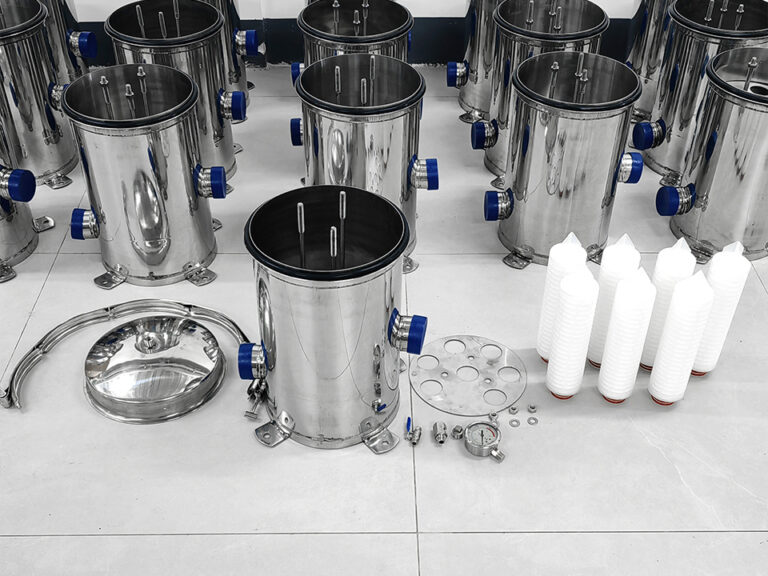
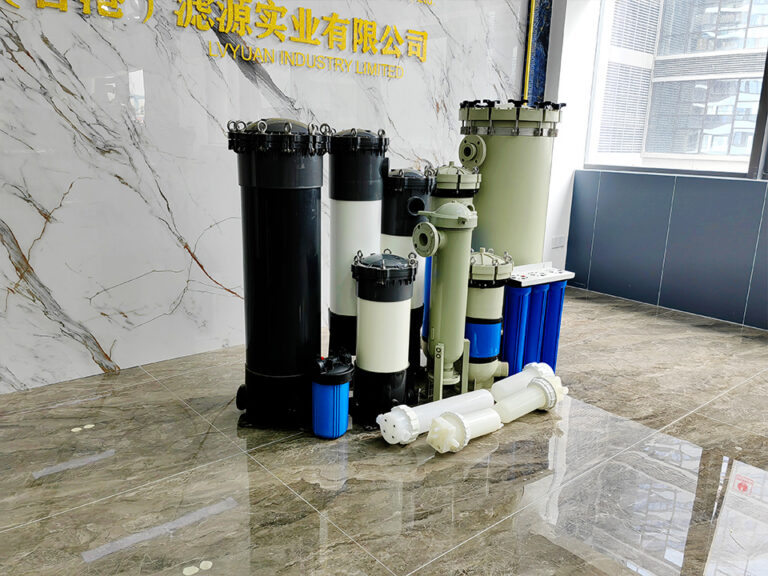
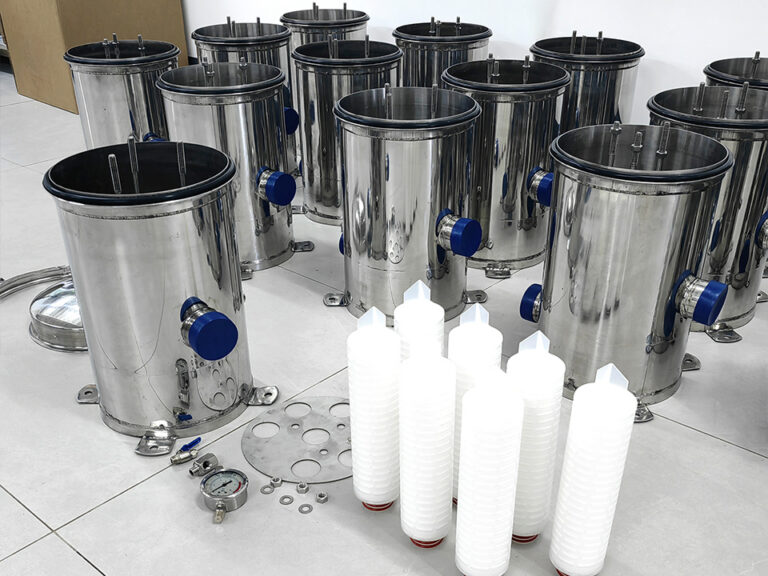
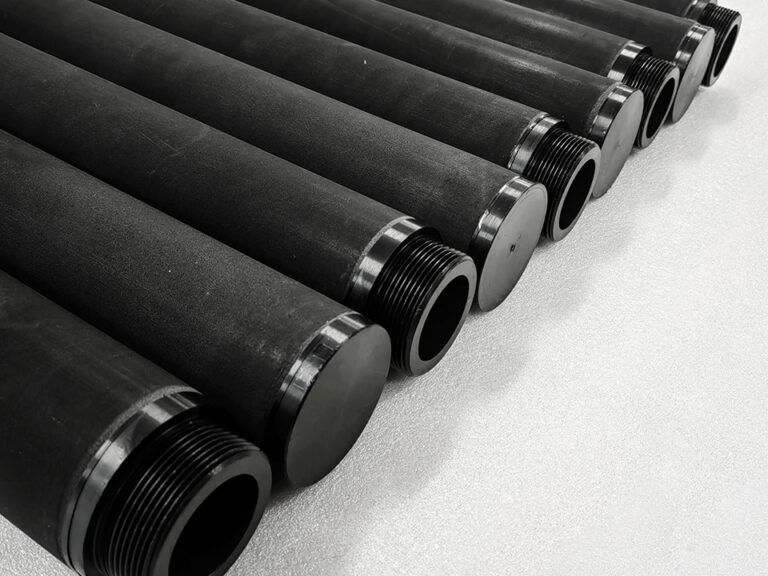
Guangzhou Lvyuan Water Purification Equipment Co. est un fabricant de filtres industriels fondé en 2009 qui conçoit et fabrique des boîtiers de filtre en acier inoxydable, des réservoirs d'eau stérile en acier inoxydable, des éléments filtrants, des sacs filtrants, des matériaux ultra-polymères et des produits filtrants frittés. Les acheteurs choisissent Lvyuan pour son support OEM/ODM, son contrôle qualité ISO9001 et ses certifications multi-pays.
Guangzhou Lvyuan Water Purification Equipment Co. Ltd.
Guide : Comment comparer les fournisseurs de cartouches à haut débit pour les installations d'osmose inverse
Un fournisseur de cartouches à haut débit peut bien mettre en avant des débits impressionnants, vanter une grande compatibilité chimique et proposer des tarifs “ direct d'usine ”, mais livrer malgré tout une cartouche qui s'encrasse prématurément, présente des défaillances sous pression différentielle, laisse passer des fibres dans le circuit ou transforme discrètement la garantie de votre membrane d'osmose inverse en un litige dont personne ne veut. Alors, qu'achetez-vous réellement ?
Vous achetez « Danger Control ».
C'est là une réalité complexe que les acheteurs ont souvent tendance à négliger lorsqu'ils comparent distributeurs de cartouches filtrantes à haut débit. La cartouche n'est pas l'élément le plus prestigieux d'une installation d'osmose inverse. C'est la membrane qui retient toute l'attention. La pompe fait l’objet d’un audit énergétique. Le panneau de commande est mis en avant. Pourtant, la cartouche filtrante, située en amont, encaisse tous les coups : limon, corrosion, colloïdes, biofilm, dépôts de carbone, résidus de polymères et tout ce que l’eau d’alimentation a décidé d’emporter ce matin-là.
Les directives se durcissent également. La réglementation de l’EPA de 2024 sur les PFAS dans l’eau potable a fixé des limites contraignantes pour un certain nombre de substances PFAS, notamment 4,0 ppt pour le PFOA et le PFOS et 10 ppt pour le PFNA, le PFHxS et le HFPO-DA, ce qui oblige les acheteurs de systèmes de traitement à mettre en place un contrôle plus rigoureux des procédés et des chaînes de traitement bien mieux validées.
Je ne comparerais pas les fournisseurs de cartouches filtrantes pour stations d'osmose inverse en fonction de la largeur de leurs magazines. Je les mettrais plutôt en parallèle en fonction de la rapidité avec laquelle leurs affirmations s'effondrent face aux remises en question techniques.
Commencer par la tâche essentielle : protéger la membrane RO
Une cartouche à haut débit n'est pas “ simplement un filtre ”. Il s'agit du dernier rempart physique avant l'étape coûteuse de la membrane, généralement après la purification sur sable, la purification multimédia, l'ultrafiltration, la purification sur charbon ou le traitement chimique.
En ce qui concerne le prétraitement par osmose inverse (RO), la discussion avec le prestataire doit commencer par les données d'exploitation :
Turbidité de l'alimentation. SDI15. TSS. COT. Fer. Manganèse. Silice. Risque d'entartrage par le carbonate de calcium. Exposition directe au chlore. pH. Température. Débit par logement. Taille cible en microns. Pression différentielle de remplacement. Fréquence de nettoyage. Coût des temps d'arrêt.
Sans ces chiffres, l'expression “ les meilleurs distributeurs de cartouches à haut débit pour les installations d'osmose inverse ” relève alors d'un simple concours d'élégance.
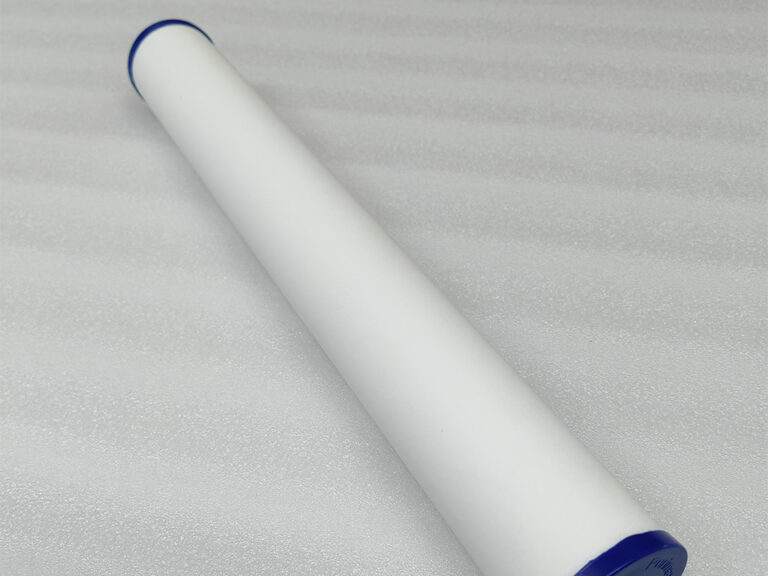
S'il s'agit d'une application dans le domaine de l'eau à usage industriel intensif, de la préfiltration pour le dessalement, de la réutilisation des eaux usées, de l'eau destinée aux procédés alimentaires ou de l'appoint des chaudières de chauffage central, je commencerais sans hésiter par opter pour une cartouche grand format, telle qu'une Cartouche filtrante sans noyau en polypropylène « melt-blown » de grand diamètre (152 mm) à haut débit, destinée à la préfiltration en thérapie liquidienne, puis obliger chaque distributeur concurrent à expliquer en quoi la géométrie de ses supports filtrants, leur capacité de rétention des impuretés, la conception de leurs joints d'étanchéité et leur courbe de perte de charge sont nettement supérieures.
Pas seulement plus abordable. Mieux.
Le premier test pour les fournisseurs : leur demander des données qu’ils ne peuvent pas produire rapidement
De nombreux fournisseurs sont capables d'envoyer un fichier PDF. Mais rares sont ceux qui fournissent des informations utiles sur les tests.
Demandez :
Taille des particules par rapport à la finesse de filtration en microns. Chute de pression dans l'eau propre au débit nominal. Température maximale de fonctionnement. Contrainte différentielle maximale. Composition du média filtrant. Matériau des embouts. Options de joints d'étanchéité. Pression de remplacement recommandée. Proportion bêta, le cas échéant. Méthode d'essai. Traçabilité de l'ensemble du lot. Technique d'emballage. Recommandations relatives à la durée de conservation.
Et ensuite, consultez les commentaires.
Un fabricant de cartouches filtrantes à haut débit de qualité répond en fournissant des chiffres, des problèmes de test et des mises en garde. Un fabricant de moindre qualité se contente de réponses vagues, utilisant des adjectifs.
Ma règle est claire : si le distributeur n'est pas en mesure d'expliquer précisément comment comparer les cartouches filtrantes à haut débit dans des conditions d'eau très sale, il n'est pas prêt pour l'acquisition d'une station d'osmose inverse. Il doit attendre les appels d'offres du marché.
Demandes d'indemnisation liées au débit : exigez le « contour des eaux usées »
L'expression “ haut débit ” est galvaudée.
Une cartouche peut présenter une circulation d'eau pure exceptionnelle à 25 °C, mais les installations d'osmose inverse ne fonctionnent pas avec de l'eau aussi pure que celle d'un laboratoire. L'eau d'alimentation réelle contient des colloïdes, des composés organiques, des impuretés, des micro-organismes, des dépôts d'oxydants et des pics saisonniers. Cela signifie que le critère déterminant n'est pas le débit optimal, mais un débit stable dans le temps à une pression différentielle appropriée.
Posez la question suivante :
“ Quelle est la variation de la perte de charge sur 24, 72 et 168 heures au niveau de mon système de remplissage d'eau d'alimentation ? ”
C'est cette question qui distingue la vente de la conception.
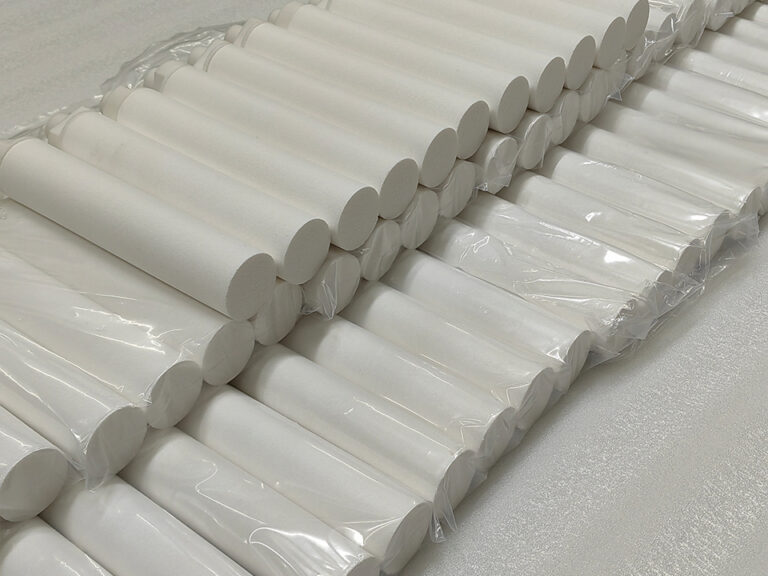
Pour une application de débris de PP de 5 µm ou 10 µm, comparez un choix classique tel qu’un Cartouche filtrante en polypropylène (PP) de 5 à 10 microns, fabriquée par soufflage à l'état fondu, destinée à la purification de l'eau par rapport à la gamme « haut débit » du fournisseur. Si la cartouche « haut débit » coûte trois fois plus cher mais dure cinq fois plus longtemps et permet de réduire la main-d’œuvre, le nombre de boîtiers et la fréquence des arrêts, elle peut s’avérer moins chère au mètre cube. Si elle vous coûte trois fois plus cher et s’use au même rythme, ce n’est qu’un gros morceau de plastique.
Compatibilité des produits : le PP n'est pas la seule solution
Le polypropylène s'impose car il est résistant aux produits chimiques, économique et couramment utilisé dans la préfiltration de l'eau. Cependant, la mention “ cartouche en PP ” ne constitue pas une spécification complète.
Il vous reste encore à vérifier :
Qualité PP. Gradient d'épaisseur par extrusion-soufflage. Phénomènes de perte de fibres. Fabrication sans tensioactif. Liaison des extrémités. Configuration sans noyau ou avec noyau. Compatibilité avec les joints en silicone, EPDM, NBR ou FKM. Compression du joint. Exposition au chlore. Résidus de nettoyage alcalin. Exposition au rinçage acide. Variations de température.
C'est là que beaucoup d'acheteurs baissent leur garde.
Une cartouche utilisée dans l'eau locale peut s'avérer insuffisante pour la préfiltration par osmose inverse (RO) de l'eau saumâtre. Une cartouche installée en aval d'un filtre multimédia risque de s'encrasser trop rapidement après le filtre à charbon. Une cartouche conçue pour un pH neutre peut se ramollir, gonfler, présenter un contournement ou fuir lorsqu'elle est exposée à des dépôts issus d'un nettoyage chimique.
La vérité sur les studios : producteur, investisseur ou cinéma de certification ?
Voici un point de vue peu populaire : de nombreux “ fabricants ” ne sont pas des fabricants au sens où l'entendent les concepteurs de méthodes.
Certains possèdent leur propre chaîne de montage. D’autres se chargent de l’assemblage. D’autres encore se contentent de réétiqueter les produits. D’autres font office d’intermédiaires. D’autres enfin disposent d’un seul atelier de qualité et de cinq certifications « empruntées ». Cela ne signifie pas pour autant qu’ils soient mauvais, mais cela modifie la manière dont on les évalue.
Demander des photos des installations de fabrication, accompagnées d'informations sur le contexte de production actuel. Demander des informations sur l'approvisionnement en supports en PP brut. Demander les registres de contrôle qualité. Demander des exemples d'étiquetage. Demander des informations sur les délais de livraison. Demander les caractéristiques de résistance dimensionnelle. Demander des informations sur les modalités d'emballage pour l'exportation. Demander des informations sur la gestion des produits défectueux. Demander qui prend en charge les frais de transport supplémentaires si les cartouches arrivent déformées, endommagées ou non conformes aux spécifications.
Un vendeur sérieux ne s'énerve pas lorsque vous lui posez ces questions.
Le marché de l'eau dans son ensemble ne reste pas inactif. Reuters a rapporté en juillet 2024 que Xylem avait revu à la hausse ses prévisions de chiffre d’affaires en raison d’une demande accrue de produits destinés au traitement de l’eau et des eaux usées, avec un chiffre d’affaires trimestriel en hausse de près de 26% et des ventes d’infrastructures hydrauliques dépassant les prévisions. Ce type de pression sur la demande met généralement à rude épreuve les chaînes d’approvisionnement, et c’est précisément à ce moment-là que les distributeurs les plus fragiles commencent à rogner sur les coûts.
Le coût est un piège : calculez le coût au mètre cube
Le coût du système fait baisser les résultats en mathématiques.
Une cartouche dont le prix est estimé à $18 peut s'avérer plus coûteuse qu'une cartouche dont le prix est fixé à $42 si celle qui est la moins chère entraîne davantage de remplacements, davantage de temps d'arrêt, davantage de nettoyage par osmose inverse, davantage d'eau de rejet, davantage de main-d'œuvre et un risque bien plus élevé d'encrassement des membranes.
Utilisez cette formule :
Prix au m SIX = (prix de la cartouche + coût de la main-d'œuvre + coût lié aux temps d'arrêt + coût d'élimination + provision pour risque lié à la membrane) ÷ quantité d'eau traitée avant le remplacement
Cette dernière expression agace les professionnels de la comptabilité. Parfait. C'est normal.
Pour un châssis pilote, un petit module ou un dispositif d'examen à boîtier transparent, un petite cartouche filtrante en PP pour l'eau, avec boîtier transparent Cela peut aider les opérateurs à visualiser les opérations de remplissage avant de passer à une production à grande échelle, comme c'est le cas pour les cartouches filtrantes industrielles à haut débit. Cela ne remplace pas les données. Il s'agit d'un contrôle de cohérence économique.
Les contraintes du monde réel : la réutilisation de l'eau impose une meilleure préfiltration
La réutilisation de l'eau industrielle n'est plus un simple slogan en faveur du développement durable. Elle devient une question de survie.
Reuters a rapporté le cas d’une usine de Nagpur, en Inde, d’une capacité de $100 millions, qui traite 200 millions de litres d’eaux usées par jour et fournit environ 190 millions de litres d’eau traitée à deux centrales thermiques. Le même rapport précise que Tata Steel vise à réduire la consommation d’eau douce de ses sites indiens à moins de 1,5 m⁴ par tonne d’acier brut d’ici 2030, soit un niveau inférieur aux 2,5 m³ actuels. Cela revêt une importance particulière pour les acheteurs de cartouches d’osmose inverse, car les eaux usées réutilisées présentent des caractéristiques bien plus variables que l’eau de robinet. Elles peuvent contenir une charge biologique, des résidus de polymères, des matières en suspension et des matières organiques dissoutes qui mettent à rude épreuve les systèmes de préfiltration peu performants.
D'autre part, l'étude de l'EPA sur les infrastructures d'eau potable estime à $625 milliards de dollars les besoins des réseaux publics d'approvisionnement en eau aux États-Unis sur une période de plus de vingt ans, ces besoins portant notamment sur la modernisation des stations de traitement, les capacités de stockage, les canalisations et les équipements connexes. Il ne s'agit pas là d'un simple cycle d'entretien. Il s'agit d'une véritable vague d'investissements.
Tableau comparatif : comment j'évalue les fournisseurs de cartouches filtrantes à haut débit
Variable d'examen
Ce qu'il faut exiger
Avertissement
Pourquoi c'est important
Rendement de la circulation
Courbes de perte de charge pour l'eau propre et l'eau chargée
Un seul chiffre correspondant au “ tirage maximal ”
Les installations d'osmose inverse cessent de fonctionner en cas de problèmes liés à la saleté, et non en raison des conditions décrites dans le magazine.
Score Micron
Note « satisfaisant » ou « excellent » avec indication de la méthode d'essai
“ 5 microns ” sans approche
Des évaluations non vérifiées peuvent entraîner des pénalités dès la phase de prétraitement RO
Bâtiment des médias
Structure en profondeur en PP extrudé-soufflé à gradient
Supports fins et homogènes proposés en haute capacité
La capacité de rétention des sédiments dépend de la profondeur de chargement
Résistance dimensionnelle
Diamètre extérieur, diamètre intérieur, taille, dimensions du joint
“Formulation ” taille universelle »
Un mauvais ajustement entraîne des fuites au niveau du contournement et du boîtier
Compatibilité des joints
Alternatives à l'EPDM, au NBR, au silicone et au FKM
Un joint pour chaque produit chimique
Une défaillance du joint peut entraîner la contamination de la chaîne de production en aval.
Traçabilité
Numéro de lot complet, document de contrôle qualité, date de fabrication
Emballages de produits vides, absence de contrôle des lots
L'absence de traçabilité implique l'absence de responsabilité
Mise en relation pour le logement
Compatibilité entre la cartouche et le récipient
Le vendeur omet de fournir des informations sur le logement
Une cartouche performante peut ne pas donner les résultats escomptés dans un environnement peu favorable
Préparation
Calendrier écrit de fabrication et d'expédition
“ Toujours disponible ” sans justificatif d'approvisionnement
Les installations de traitement par osmose inverse ne peuvent pas être mises à l'arrêt lors des remplacements d'urgence
Prix total
Prix au mètre carré de bois traité
C'est le tarif le plus bas pour l'appareil qui l'emporte
Les cartouches bon marché peuvent faire grimper les coûts de nettoyage de la couche membranaire
Questions à poser avant d'acheter
Posez ces questions avant de passer une commande :
Outre le prix, quels sont les critères à prendre en compte chez les distributeurs de cartouches à fort volume de vente ?
Pouvez-vous me fournir une courbe de perte de charge correspondant à mon débit cible ?
Quelle est la différence de pression de remplacement recommandée ?
La cartouche est-elle de petite taille ou de capacité absolue ?
Quelle nuance de PP est utilisée ?
Prend-il en charge les configurations de 20 pouces, 40 pouces ou 60 pouces ?
Pouvez-vous fournir des boîtiers compatibles ?
Utilisez-vous des échantillons provenant de la même chaîne de production que les commandes en gros ?
Quelle est la technique d'emballage des produits pour les livraisons à l'exportation ?
Que se passe-t-il si les cartouches sont déformées à la livraison ?
Pouvez-vous assurer la traçabilité des lots ?
Pourriez-vous nous expliquer pourquoi votre cartouche est adaptée aux systèmes de préfiltration par osmose inverse, et pas simplement à la filtration d'eau en général ?
Meilleur profil de fournisseur pour les installations d'osmose inverse
Le meilleur prestataire n'est pas forcément le plus grand. C'est celui qui vous apporte une assurance technique avant même que vous ne payiez.
Pour les installations d'osmose inverse, je choisis des fournisseurs capables de proposer sous un même toit des cartouches à haut débit, des filtres à débris en PP classiques, des boîtiers adaptés et une assistance technique standard. Cela évite les reproches mutuels. Lorsque la cartouche s'encrasse prématurément, le vendeur de cartouches met en cause l'eau d'alimentation. Le fournisseur d'équipements accuse l'installation. L'exploitant de l'installation met en cause le service des achats. Tout le monde se transforme en spécialiste une fois la panne survenue.
En somme, je préfère les systèmes de fournisseurs plutôt que des éléments isolés.
Une liste de produits recommandés pourrait inclure une cartouche en PP à haut débit pour la préfiltration primaire, des cartouches en PP classiques pour la filtration des sédiments destinées aux circuits supplémentaires ou à faible débit, ainsi que des éléments en acier inoxydable lorsque la résistance est un critère important. Axez la comparaison sur les coûts d'exploitation, et non sur le langage marketing.
Questions fréquemment posées
Quels sont les critères à prendre en compte pour choisir des distributeurs à cartouche à haut débit ?
Essayez de trouver un fournisseur capable de confirmer le débit nominal des cartouches, leur finesse de filtration en microns, les courbes de perte de charge, la compatibilité avec le polypropylène ou les joints d'étanchéité, la traçabilité des lots et la stabilité des délais de livraison, en fonction des caractéristiques réelles de l'eau d'alimentation de votre installation d'osmose inverse, et non pas sur la base d'un problème théorique présenté dans une brochure commerciale qui disparaît après trois jours de fonctionnement.
Ensuite, demandez des exemples et comparez-les à vos propres problèmes liés à l'eau. Ne laissez pas un fournisseur se retrancher derrière l'argument de l“” utilisation industrielle conventionnelle ». La préfiltration par osmose inverse n'est pas courante lorsque l'eau d'alimentation change régulièrement.
Comment compare-t-on précisément les cartouches filtrantes à haut débit destinées aux installations d'osmose inverse ?
Pour comparer les cartouches filtrantes à haut débit, il convient de mesurer la perte de charge, la capacité de rétention des impuretés, la conformité à la finesse de filtration en microns, la stabilité des joints, l'ajustement au boîtier, la composition et la conception du média filtrant, la fréquence de remplacement, ainsi que le coût par mètre cube d'eau traitée, dans des conditions d'exploitation et avec une qualité d'eau d'alimentation identiques.
L'erreur consiste à ne comparer que le prix des cartouches. Une cartouche moins chère qui s'encrasse plus rapidement ou qui permet un contournement peut, sans qu'on s'en rende compte, entraîner une augmentation de la fréquence de nettoyage des membranes, de la consommation de produits chimiques, de la main-d'œuvre et des temps d'arrêt.
Les cartouches à haut débit sont-elles plus efficaces que les cartouches à sédiments en PP classiques ?
Les cartouches à haut débit sont nettement plus adaptées lorsque l'installation d'osmose inverse nécessite un débit plus élevé, un encombrement réduit, une maintenance moindre et une meilleure capacité de rétention des impuretés ; toutefois, les cartouches de base en polypropylène (PP) peuvent s'avérer bien plus adaptées aux petits systèmes, aux étapes de polissage, aux essais pilotes ou aux applications où les besoins en débit sont modestes.
En termes simples : un débit élevé n'est pas automatiquement synonyme d'excellence. Il n'est supérieur que lorsque la conception de l'installation, le débit, la charge d'alimentation et la configuration des locaux le justifient.
Quelle est la meilleure granulométrie pour les cartouches de pré-purification par osmose inverse ?
La granulométrie la plus efficace pour les cartouches de préfiltration par osmose inverse est généralement déterminée en fonction de la qualité de l'eau d'alimentation, du degré de sensibilité de la membrane, du traitement en amont et de l'objectif de contrôle de l'indice SDI ; de nombreuses installations optent pour des granulométries de 1 µm, 5 µm, 10 µm ou pour une filtration par étapes plutôt que de choisir une seule granulométrie unique.
Je me méfie des réponses générales ci-dessous. Une station d'osmose inverse (RO) pour eau saumâtre, installée en aval d'une filtration multimédia, et une station d'osmose inverse (RO) pour la réutilisation des eaux usées, installée en aval d'un traitement biologique, ne sont pas exactement la même chose.
À quel moment faut-il remplacer les cartouches à haut débit d'une installation d'osmose inverse ?
Une installation d'osmose inverse doit remplacer les cartouches à haut débit lorsque la pression différentielle atteint la limite recommandée par le fournisseur, lorsque le débit devient irrégulier, lorsque les tendances en matière d'indice SDI ou de turbidité s'accentuent, ou lorsque l'entretien préventif programmé indique que l'encrassement des cartouches approche du seuil à partir duquel le risque de dérivation ou d'encrassement des membranes augmente.
N'attendez pas que le système tombe en panne. Le remplacement des cartouches représente un coût modique comparé aux dommages causés à la couche membranaire, à une fermeture d'urgence ou à une intervention le week-end, les opérateurs devant alors faire face à une alarme de tension croissante.
Dernières recommandations d'achat
Évitez les cartouches à haut débit, comme celles utilisées sur le lieu de travail.
Considérez-les comme une couverture d'assurance pour la chaîne de membranes d'osmose inverse.
Sélectionnez les fournisseurs capables d'expliquer les habitudes de circulation, la charge en eaux usées, la conception et la fabrication des médias en polypropylène, la composition chimique des joints, l'adéquation aux locaux, la traçabilité et le coût au m³. Ensuite, testez des échantillons. Mettez-les à l'épreuve. Découpez-les. Surveillez la chute de pression. Comparez le volume réel durci. Posez des questions qui dérangent.
Le fournisseur qui parvient à passer toutes les étapes de ce processus est très probablement celui sur lequel on peut compter.
Pour les clients exploitant des installations d’osmose inverse qui comparent actuellement les différentes options, commencez par vérifier la compatibilité entre les cartouches et les boîtiers, puis établissez un tableau de bord des fournisseurs en vous basant sur des données d’exploitation réelles. Si votre installation nécessite une préfiltration à grand format, évaluez les cartouche en polypropylène à grand diamètre et à haut débit et vérifiez qu'il correspond à vos exigences en matière de débit, de microns et de pression différentielle avant de demander un devis de production.