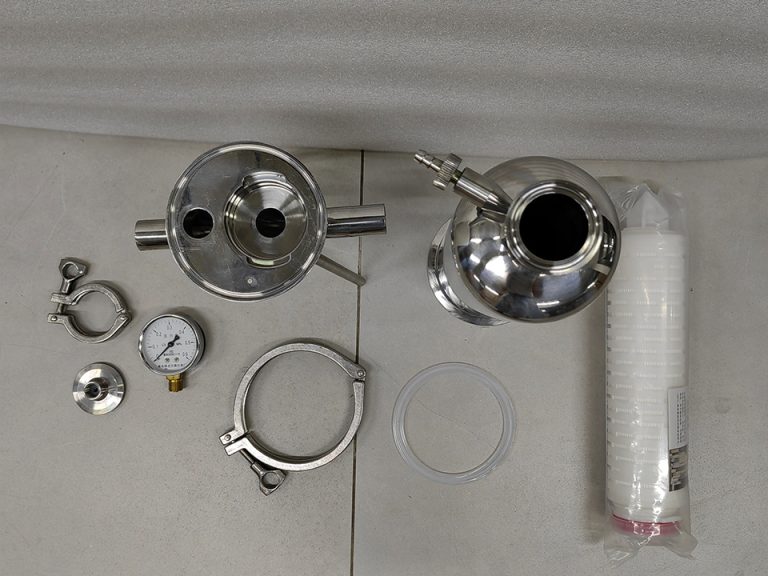
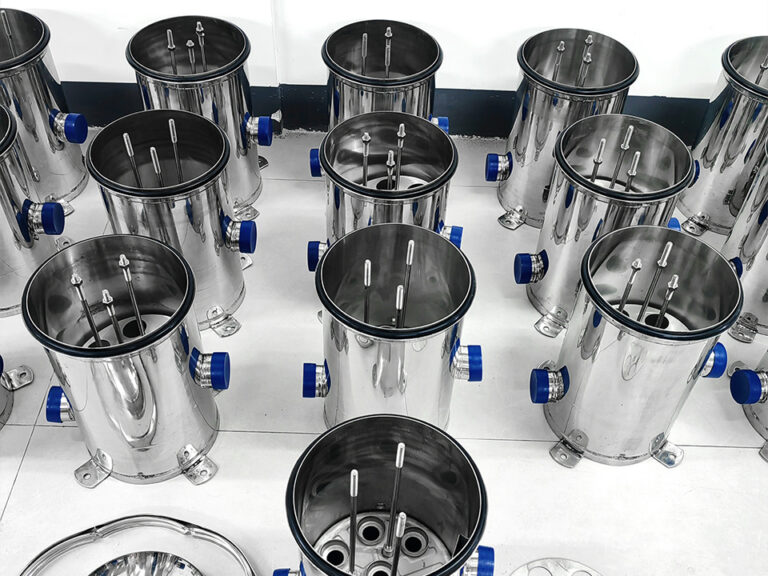
Guangzhou Lvyuan Water Purification Equipment Co. est un fabricant de filtres industriels fondé en 2009 qui conçoit et fabrique des boîtiers de filtre en acier inoxydable, des réservoirs d'eau stérile en acier inoxydable, des éléments filtrants, des sacs filtrants, des matériaux ultra-polymères et des produits filtrants frittés. Les acheteurs choisissent Lvyuan pour son support OEM/ODM, son contrôle qualité ISO9001 et ses certifications multi-pays.
Guangzhou Lvyuan Water Purification Equipment Co. Ltd.
Un seul bâtiment peut-il abriter à la fois des systèmes de traitement des eaux usées et de dessalement ?
Sometimes, but only if the housing is specified for the harder of the two duties. A filter housing is a pressure vessel with wetted materials, seals and an internal element format, and a manufacturer can reuse all three across wastewater and desalination projects. What cannot be reused by default is the operating envelope. Seawater feed puts chloride exposure and crevice corrosion first. Wastewater and reuse feeds bring oxidants, oils, heavier solids loading and cleaning chemicals that attack polymers and elastomers in different ways. For distributors, OEM system builders and EPC purchasing teams who want a smaller housing range, the practical question is where the two envelopes overlap and which parts must change for each duty. This article covers those decision points and the data an RFQ needs.
When Can a Single Housing Platform Cover Both Applications?
A single housing platform can cover both applications when four conditions match:
The wetted body material tolerates the worst chemical exposure at either site.
The pressure and temperature rating covers the worst combined case.
The gaskets suit the fluids.
The element format fits the contaminant load.
If any one of these fails, the better answer is a shared platform with different material or seal options rather than one identical unit.
The distinction matters because the two duties stress housings differently. In a seawater reverse osmosis (SWRO) system, the cartridge filter is a final safety barrier ahead of the membranes.
One supplier’s engineering guide
places the cartridge filter upstream of the high-pressure pump, so the housing usually sees feed-side pressure rather than membrane pressure. Whether that holds in your design depends on the pump and energy-recovery arrangement, so confirm it with the system designer.
Wastewater duties vary more widely. A housing might protect an RO unit in a reuse train, polish effluent, or filter a dosing stream. Each case has a different chemical and solids profile, so “wastewater” is not one specification.
Duty factor
Wastewater or reuse duty
Seawater desalination (SWRO) pretreatment
What it means for a shared housing
Main chemical stress
Oxidants, cleaning chemicals, process residues; varies by plant
High-chloride feed; pitting and crevice corrosion risk for metals
Check material against the worst-case chemistry, not the average
Typical solids behavior
Variable load; possible oils, grease and biological matter
Fine particles and colloids after upstream pretreatment
Element type and rating usually differ even if the vessel is identical
Role of the housing
Polishing, protection or process filtration
Safety filtration ahead of membranes
Reliability and consistent cartridge quality matter more in the SWRO position
Cleaning or disinfection
Possible shock dosing or periodic chemical exposure
Typically managed around membrane protection
Seal and body compatibility must cover the cleaning events
Pressure at the housing
Depends on the process
Depends on whether the filter sits upstream of the high-pressure pump
Compare to the housing’s rating at the actual operating temperature
Which Specification Factors Decide Whether a Housing Can Cross Over?
Four factors decide it: wetted material against chemistry, pressure and temperature derating, gasket compatibility, and element format. Each has a distinct failure mode.
Wetted material versus chloride and oxidants
Polymers do not pit in chloride the way stainless alloys can, which is why plastic and FRP housings are commonly considered for seawater-contact duty. The weakness shifts to oxidants.
Charlotte Pipe’s comparison of CPVC, polypropylene and PVDF
notes that polypropylene can degrade with long-term exposure to oxidizers such as hydrogen peroxide or sodium hypochlorite. It also notes that PVDF shows significant resistance to strong acids and oxidizers but limited resistance to some concentrated alkalis. That article covers piping materials, so treat it as general polymer guidance and not a rating for any specific housing.
For stainless steel, the answer depends on alloy and exposure. Grade 304 carries a higher pitting risk in chloride-rich water. Stainless housings meant for direct seawater contact need an alloy-level corrosion review from the supplier, including weld and crevice areas.
Pressure and temperature derating
A single pressure number on a datasheet does not describe thermoplastic behavior. The
Plastic Pipe and Fittings Association
notes that for most thermoplastic piping materials, higher temperature reduces allowable working pressure. It advises checking the manufacturer’s published limits and derating tables. The same logic applies to molded plastic housings. A wastewater stream that runs warm can erase the margin that a seawater duty at ambient temperature leaves intact.
Gasket and seal compatibility
Seals deserve a separate check from the body. Elastomers differ in how they handle oxidants, oils and hydrocarbons, so a gasket that suits clean seawater may not suit oily effluent. Several of the housings below list EPR, silicone or Viton options. Specify the seal against the actual fluid list, including cleaning agents, and ask the supplier for a compatibility reference.
Element format and rating
Housing and element are separate decisions. The DuPont FilmTec manual’s section on cartridge microfiltration for RO pretreatment states that an absolute-rated cartridge below 10 µm is the suggested minimum for every RO system, that 5 µm absolute is recommended, and that 1–3 µm absolute is recommended where colloidal silica or metal silicate fouling is a risk. It also recommends replacement before the pressure drop reaches its permitted limit, and at least every three months. It calls for a differential pressure gauge and a synthetic, non-degradable cartridge material such as polypropylene or nylon.
Those points are specific to RO protection. A wastewater polishing duty with high solids may use a coarser bag first, and the housing must accept that format. Buyers can compare stainless steel and plastic bag filter housings and cartridge options before fixing the element.
How Do PP, PPH, PVDF, FRP and Stainless Steel Housings Compare?
The table lists the manufacturer-published ratings from the supplied Lvyuan plastic housing pages, followed by editorial guidance on where each material needs caution. Ratings come from product pages, not independent testing, and the pages do not claim suitability for seawater or wastewater duty. Ask for written confirmation against your fluid.
Not always. A lower inventory count looks efficient, but lowest unit price and fewest SKUs do not guarantee lowest total cost. A housing sized to survive the harshest site can be over-specified, and expensive, for the milder one. A housing sized for the milder site can fail early at the other.
The more defensible approach is to standardize the platform and vary the parts that depend on chemistry: body material tier, gasket and element. This keeps spare-parts logic simple, such as one cartridge length and one connection standard, while avoiding a material mismatch.
An illustrative example, not a customer case: a system builder standardizes on PP housings with one gasket grade for a reuse skid and a seawater RO container. The seawater unit runs without trouble. At the reuse site, periodic hypochlorite dosing shortens the service life of the housing’s seals and polypropylene components. The mismatch only surfaces after commissioning because the RFQ listed “water treatment” rather than the cleaning chemicals used. Standardization saved little, and replacement cost more than a PVDF or revised-seal specification would have.
What Mistakes Cause Shared-Housing Projects to Fail?
These errors come from the reasoning above, not from a measured failure rate:
Specifying by micron rating alone. A nominal rating is not the same as an absolute rating, and the DuPont guidance is written around absolute-rated cartridges.
Ignoring cleaning events. Housings are often chosen for the normal feed, then exposed to disinfection or cleaning chemicals nobody listed.
Reading one pressure value at ambient temperature. Combined pressure and temperature limits matter, especially for thermoplastics.
Using the cartridge as a bulk solids filter. The DuPont manual states that replacing cartridges more often than every one to three months usually points to a pretreatment problem. Cartridges are not meant to remove high solids loads. A coarse bag stage or better upstream treatment is the fix, not a larger housing.
Overlooking sub-micron foulants. The same manual notes that metallic sulfides and colloidal sulfur in feedwater can pass a typical 5 µm cartridge.
Ignoring the installation environment. Plastic and FRP housings on open-air or containerized skids face UV exposure that an indoor plant room does not.
What Should an RFQ Include for a Shared Housing?
An accurate quotation needs the fluid and event list, not only the flow rate. Prepare:
Fluid description: feed type, chloride level, pH range, oils or solvents present, and any oxidants.
Cleaning and disinfection chemicals: names, concentrations and frequency.
Operating and peak pressure and temperature: including start-up, surge, and winter or summer extremes.
Flow rate and element: design flow, absolute or nominal rating, cartridge length or bag size, and quantity per housing.
Connexions : NPT, BSP or flange, and pipe size.
Matériau du joint : against the fluid list.
Installation: indoor or outdoor, orientation, and drain or vent needs.
Order terms: quantity, target market, test or documentation requirements, lead time and any OEM branding.
Que faut-il vérifier avant de choisir un fournisseur ?
Before approving a single housing for both duties, request:
A written statement of suitability for each fluid and cleaning chemical, not only a general “corrosion resistant” description.
The pressure rating at your actual operating temperature, with derating data for thermoplastic bodies.
Gasket material compatibility data for your fluids.
Confirmation of how the supplier tests housings, such as pressure testing or batch checks, and what documentation accompanies shipments.
Sample units for the highest-risk site first.
If the two duties diverge on any of these points, split the specification and keep the shared elements, such as connection standard and cartridge length.
Questions fréquemment posées
Can the same filter housing be used for wastewater and seawater desalination? Yes, if its body, seals and ratings cover the harsher chemistry, temperature and pressure of both. A shared platform with different gaskets, material tiers or elements is usually safer than one identical unit everywhere.
Which housing material suits seawater RO pretreatment? Non-metallic bodies such as FRP, PPH and PVDF are commonly considered because they do not pit in chloride. Stainless steel needs alloy-level review. Final choice depends on pressure, temperature, cleaning chemicals and the supplier’s validated ratings.
What micron rating belongs in a housing ahead of RO membranes? The DuPont FilmTec manual recommends 5 µm absolute as the pretreatment cartridge, with 1–3 µm absolute where colloidal silica or metal silicates are a risk. Confirm with the membrane supplier’s feed requirements.
Can polypropylene housings handle chlorine or hypochlorite in wastewater? Not reliably for long-term exposure. Charlotte Pipe notes polypropylene can degrade with long-term exposure to oxidizers such as sodium hypochlorite. Ask for fluid-specific confirmation or consider PVDF.
Should I choose bag or cartridge housings? Cartridge housings suit fine final protection, such as before RO. Bag housings often suit higher solids loads or coarser stages upstream. The choice depends on solids concentration and the required rating.
How does temperature affect a plastic housing’s pressure rating? For most thermoplastics, higher temperature lowers allowable working pressure, according to the Plastic Pipe and Fittings Association. Use the manufacturer’s derating data at your real operating temperature, not the ambient-temperature figure.