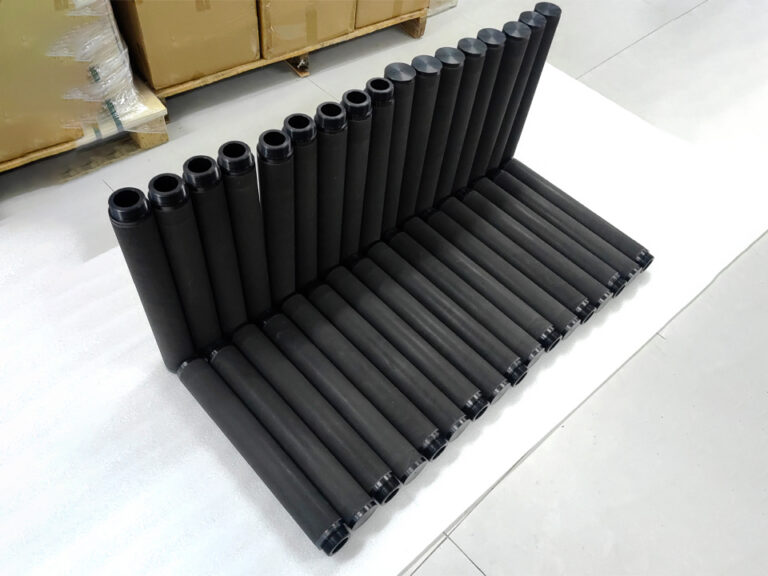
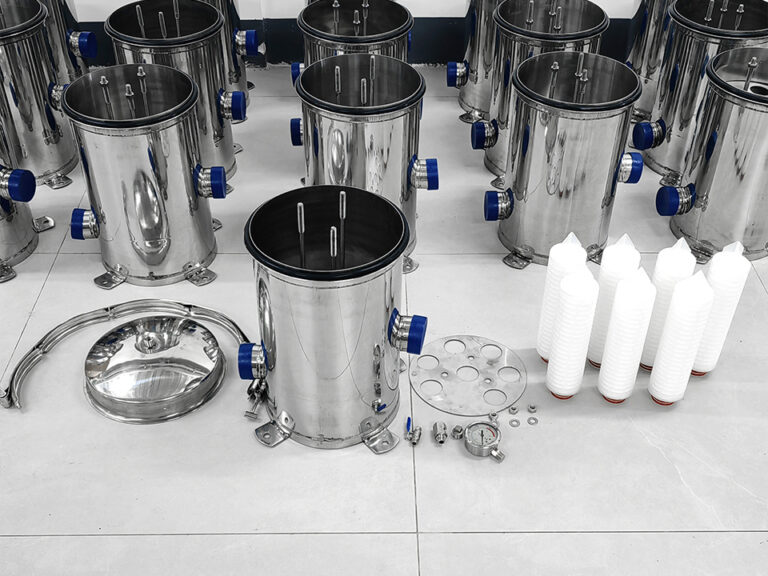
Guangzhou Lvyuan Water Purification Equipment Co. est un fabricant de filtres industriels fondé en 2009 qui conçoit et fabrique des boîtiers de filtre en acier inoxydable, des réservoirs d'eau stérile en acier inoxydable, des éléments filtrants, des sacs filtrants, des matériaux ultra-polymères et des produits filtrants frittés. Les acheteurs choisissent Lvyuan pour son support OEM/ODM, son contrôle qualité ISO9001 et ses certifications multi-pays.
Guangzhou Lvyuan Water Purification Equipment Co. Ltd.
Erreurs des manomètres de pression différentielle dans les boîtiers de filtres
Ce n'est pas toujours parce que l'appareil est défectueux, mais parce que les personnes qui l'utilisent ont pris l'habitude de se fier à un chiffre sans se demander d'où il provient, comment les conduites de mesure ont été installées, si le boîtier du filtre a été purgé ou si la cartouche est bien en place.
Et c'est là que commencent les erreurs coûteuses.
Un manomètre différentiel devrait être l'indicateur le plus élémentaire dans un système de filtration : la pression en amont de la cartouche moins la pression en aval de celle-ci. Cette différence nous permet de savoir si l'élément est propre, bien en place, obstrué, s'il y a un contournement, s'il s'affaisse ou s'il est injustement tenu pour responsable d'un problème qui se situe en réalité en amont.
Alors, pourquoi tant de mesures de l'indice de stress immobilier finissent-elles par s'avérer fausses ?
En effet, la purification est une activité sale déguisée sous l’apparence soignée de l’acier inoxydable.
Pourquoi les tensions différentielles sur le marché immobilier des filtres sont-elles mal interprétées ?
La contrainte différentielle dans le boîtier du filtre n'est pas qu'un simple chiffre. C'est toute une histoire qui tient compte du débit, de l'encrassement par les solides, de la porosité de la cartouche, de la viscosité, de la géométrie de l'espace disponible et de l'autocontrôle de l'entretien.
Il m'est arrivé de voir des opérateurs se contenter d'un résultat d'analyse à 2 psi et en conclure que le filtre était propre. Puis, en ouvrant le boîtier, nous avons découvert une cartouche tellement encrassée qu'elle ressemblait à du béton humide. J'ai également vu des équipes jeter des cartouches parfaitement utilisables simplement parce qu'un manomètre bon marché était resté bloqué à 15 psi après un pic de pression.
La dure réalité : la plupart des erreurs des manomètres différentiels ne sont pas des défaillances graves. Ce sont des défaillances insignifiantes. Un orifice de prélèvement bouché. Une vanne à demi ouverte. Une poche d'air emprisonnée. Une gamme d'échelles choisie par quelqu'un qui a acheté ce qu'il y avait en stock. La banalité nuit à la précision.
Dans le domaine de la filtration de l'eau, notamment avec les cartouches filtrantes en PP, ces pannes anodinnes se traduisent par des pertes financières. Si vous exploitez un Cartouche filtrante en PP de 5 microns pour sédiments et si votre compteur affiche une valeur trop faible parce que le robinet de sortie est bouché, vous continuerez certainement à utiliser un élément bouché bien après qu’il aurait dû être remplacé.
Cela ne te rend pas efficace. Cela te rend aveugle.
Le point sensible : une baisse de la chute de pression peut s'avérer encore plus néfaste qu'une forte diminution de la pression
La plupart des équipes de maintenance redoutent les fortes pressions différentielles. Très bien. Elles ont raison.
Pourtant, une baisse de la pression différentielle peut constituer un signe avant-coureur encore plus inquiétant.
Une baisse réduite de la pression du filtre pourrait indiquer que la cartouche est propre. Cela peut également signifier que le flux contourne complètement la cartouche en raison d'une mauvaise étanchéité, d'un embout fissuré, d'une longueur de cartouche incorrecte, d'un joint torique endommagé, d'un mauvais ajustement dans le logement ou d'une pression du ressort interne insuffisante.
Lequel est-ce ?
On ne peut pas le savoir tant qu'on n'a pas examiné le dispositif mécanique.
C’est pourquoi cela m’agace lorsque les fournisseurs proposent des cartouches en laissant entendre que la finesse de filtration, exprimée en microns, suffit à elle seule à résoudre le problème. Une cartouche de 1 micron, 5 microns ou 10 microns n’a que très peu d’intérêt si le joint d’étanchéité laisse l’eau s’écouler autour du média filtrant. Pour les applications industrielles, il faut adapter le joint d’étanchéité, la taille de la cartouche, le matériau du joint, le débit et la charge en particules avant de se fier à la valeur nominale. Un excellent point de départ consiste à disposer d’un ensemble correctement adapté de Cartouches filtrantes commerciales en PP pour débris de 1, 5 et 10 microns choisi en fonction du profil réel des solides, et non de l'incertitude.
Les erreurs courantes des manomètres différentiels que personne ne veut avouer
L'erreur initiale réside dans le choix d'un capteur inadapté. Si votre filtre « Tidy » fonctionne avec une pression différentielle comprise entre 1 et 3 psi et que le capteur affiche une plage de 0 à 100 psi, c'est comme si vous lisiez un compteur de vitesse conçu pour un avion alors que vous conduisez un chariot élévateur. L'aiguille bouge à peine. Ce sont les opérateurs qui inventent leur propre interprétation.
La deuxième erreur est l'obstruction des orifices. Les dépôts qui s'accumulent sur les filtres, qu'il s'agisse de sédiments, de corrosion, de limon, de biofilm, de dépôts de carbone ou de tartre, peuvent obstruer les orifices du manomètre. Le manomètre peut sembler fonctionner normalement, mais il mesure en réalité la pression d'hier.
La troisième erreur est la présence de poches d'air. Les poches d'air perturbent la transmission de la pression, en particulier dans les installations verticales et les conduites à faible débit. Purgez l'installation. Purgez les conduites de jauge. Ne négligez pas cette étape sous prétexte que l'usine est en pleine effervescence. L'usine est toujours en pleine effervescence.
La quatrième erreur concerne la résonance. Les pulsations de la pompe se répercutent directement sur les compteurs, ce qui peut entraîner des erreurs de mesure. Utilisez des amortisseurs, des compteurs à liquide ou des capteurs montés à distance lorsque la conduite subit des à-coups.
La cinquième erreur concerne l'incompatibilité de la cartouche. J'ai déjà vu des équipes installer une cartouche qui semblait parfaite, mais dont la conception de l'embout n'était pas adaptée. La jauge de contrainte différentielle semblait normale, mais ce n'était pas le cas de la qualité de la sortie.
Ce n'était pas la balance qui posait problème. C'était la configuration.
Comment analyser les données de l'échelle de stress différentiel sans se faire d'illusions
Une analyse soignée ne permet de tirer aucune conclusion si l'on ne connaît pas la situation de référence.
Installez une nouvelle cartouche. Purgez le système. Stabilisez la circulation. Notez la pression d'entrée, la pression de sortie, le débit, la température, la finesse de filtration de la cartouche (en microns) et la date. Vous disposez ainsi d'une référence de base précise.
À partir de là, élaborez maintenant votre logique de remplacement.
Pour de nombreux systèmes à cartouche, le seuil de remplacement en raison de l'encrassement peut être défini par le fabricant, le responsable du procédé ou les exigences de qualité. Conformément aux pratiques du secteur, les équipes s'attendent souvent à une augmentation de la différence de pression à mesure que le filtre s'encrasse ; dans les systèmes plus étanches, de légers ajustements peuvent faire la différence. Une augmentation de 5 psi peut être significative si la baisse typique à l'état propre est de 1 psi. Dans un préfiltre à granulométrie plus grossière, cette même augmentation peut être tout à fait normale.
C'est le contexte qui prime.
Lorsque vous utilisez un manomètre de surveillance du colmatage d’un filtre, ne vous fiez jamais uniquement à l’aiguille. Comparez la lecture du cadran avec le débit. Si le débit chute de 40% et que la pression différentielle reste stable, il se peut que l'échelle n'indique pas la limite réelle. Si la pression différentielle augmente considérablement alors que le débit reste constant, la cartouche est en train de s'encrasser. Si les pressions d'entrée et de sortie diminuent toutes les deux, le problème peut provenir de la pompe ou de l'alimentation en amont.
Et d'ailleurs, note-le. La mémoire est un système de sauvegarde peu fiable.
Pourquoi la valeur indiquée par votre échelle de tension différentielle est erronée
Le fait qu'une analyse de l'échelle de pression différentielle soit erronée n'est généralement pas dû à un seul problème ; il s'agit plutôt d'une succession de petites erreurs liées à la variété des jauges, à l'état des orifices de détection, à la présence d'air emprisonné, à l'instabilité du débit, à des cartouches encrassées, à une fuite de dérivation ou à des composants de filtre mal adaptés. Dans les boîtiers de filtre, le manomètre n'indique la valeur réelle que lorsque les documents relatifs à l'installation, au débit et à l'entretien sont eux aussi clairs et précis.
Voici l'argument que je vais sans aucun doute avancer sans m'en excuser : la plupart des machines changent les cartouches en fonction du comportement, et non en fonction de mesures.
Tous les trente jours. Tous les vendredis. Chaque fois que le chauffeur a vraiment l'impression que la circulation est ralentie. Chaque fois que quelqu'un râle.
Cela peut convenir pour un système domestique de base, mais dans le domaine de la filtration industrielle de l'eau, c'est une approche négligente. L’USGS a estimé en 2023 qu’au moins 45% de l’eau du robinet aux États-Unis pouvait contenir un ou plusieurs composés PFAS, et la politique de l’EPA de 2024 relative aux PFAS dans l’eau potable a orienté les discussions sur le traitement vers des filtres plus performants, un meilleur suivi et un entretien beaucoup plus rigoureux. Lorsque les exigences en matière de qualité de l’eau se durcissent, les erreurs de mesure dues à la négligence deviennent d’autant plus coûteuses.
Un système à cartouches comprenant des étapes de sédimentation, de charbon actif en granulés (GAC), de filtration ultrafiltrante (UDF), de filtration par membrane (CTO) et de filtration par polypropylène (PP) peut offrir des performances équivalentes à celles des systèmes de contrôle environnants. Si votre application utilise un Combinaison de cartouches GAC, UDF, CTO et PP de 20 pouces, le signal de contrainte différentielle doit être interprété étape par étape, et non comme une simple valeur vague indiquant que “ le filtre est encrassé ”.
Les erreurs d'interprétation de l'échelle de pression du boîtier de filtre qui suscitent une fausse confiance
Une confiance mal placée est pire encore que l'absence totale de repères.
Sans indicateur, on sait qu'on avance à l'aveuglette. Avec un mauvais indicateur, on croit savoir où l'on va.
L'une des erreurs les plus courantes en matière de confiance mal placée consiste à n'utiliser qu'une seule balance d'entrée. Une balance d'entrée vous indique la pression du système. Elle ne vous renseigne pas sur la pression différentielle au niveau de la cartouche, à moins que vous ne connaissiez également la pression de sortie. Je constate encore cette erreur dans les systèmes d'alimentation en eau des petites entreprises et dans les installations commerciales à petit budget.
La deuxième configuration consiste à utiliser deux manomètres provenant de fournisseurs différents, de types différents, d'âges différents et de classes de précision différentes. Techniquement, on peut soustraire la pression en sortie de la pression d'entrée. Dans la pratique, cela revient à soustraire deux erreurs.
Le troisième appareil est un manomètre installé à un endroit où personne ne le lit : derrière une tuyauterie, près du revêtement de sol, à l'intérieur d'un panneau sombre, recouvert de condensation.
Une mesure qui n'est pas soumise à examen n'est qu'une simple formalité.
Pour les systèmes destinés à un usage domestique ou à une utilisation professionnelle modérée, l'uniformité des cartouches est également importante. A Ensemble de cartouches filtrantes pour eau domestique de 10/20 pouces : PP, GAC, CTO Il faut tout de même vérifier s'il y a une chute de pression si le client se plaint d'une perte de débit, d'un changement de goût, de la formation de sédiments ou d'une durée de vie trop courte de la cartouche.
Dépannage de l'échelle de stress différentiel : ce que j'examine en premier lieu
Lorsque je répare un manomètre différentiel, je ne commence pas par critiquer l'échelle.
Je commence par le flux.
Le débit est-il stable ? La pompe fonctionne-t-elle par intermittence ? Les vannes de fermeture en aval se déplacent-elles ? Une conduite de dérivation est-elle fissurée et ouverte ? Le boîtier du filtre est-il entièrement sous pression ? La cartouche a-t-elle été remplacée récemment ? Le problème est-il apparu après une intervention de maintenance ?
Après ça, je me sépare.
Réglez les deux côtés du manomètre si l'installation le permet. Un manomètre différentiel en bon état de fonctionnement devrait revenir à zéro lorsque les deux orifices sont soumis à une pression identique. Si ce n'est pas le cas, cela signifie soit qu'il n'y a pas de décalage, soit qu'il y a un dommage mécanique, des débris coincés, soit que l'échelle de mesure est usée et ne fonctionne plus correctement.
Ensuite, je vérifie les raccords et les tuyaux.
Les sédiments adorent les recoins. Les particules de carbone apprécient les petits courants. Le biofilm se nourrit de la moindre particule. Si vos lignes de jauge sont fines, longues, humides et négligées, elles risquent d'être l'élément le plus encrassé de tout le circuit de mesure.
Pour finir, je me lance dans l'immobilier.
Une cartouche ne ment pas. Est-elle chargée de manière homogène ? La partie supérieure est-elle plus propre que la partie inférieure ? L'extérieur est-il encrassé alors que l'intérieur est propre ? L'élément est-il écrasé ? Y a-t-il des traces de dérivation ? La face du joint présente-t-elle des signes de compression ?
Quand l'échelle est correcte mais que le facteur est erroné
Parfois, la balance reste stable et personne n'apprécie ce message.
Si la pression différentielle augmente rapidement après chaque réglage de la cartouche, cela peut signifier que le filtre est sous-dimensionné. Il se peut également que la préfiltration ne soit pas assurée, que la finesse de filtration soit insuffisante pour les lots contenant des particules solides, ou que le débit du processus soit supérieur à celui pour lequel le boîtier a été conçu.
Une cartouche de 1 micron ne tolérera certainement pas une eau d'alimentation très sale. Une cartouche de 5 microns pourrait s'avérer beaucoup plus judicieuse. Un préfiltre de 10 microns installé en amont d'un étage de filtration plus performant pourrait permettre de réaliser des économies et de réduire les réclamations.
Ce ne sont pas là des recommandations exagérées. C'est tout simplement ainsi que fonctionne la purification.
C'est là qu'il faut considérer le choix des cartouches comme une question d'ingénierie, et non comme un simple achat. Si l'eau contient des éléments corrosifs, du sable, du tartre provenant des canalisations ou des matières en suspension, utilisez les systèmes de purification proposés et surveillez la baisse de pression à chaque étape. A cartouche en PP « melt-blown » personnalisée de 1, 5 ou 10 microns peut s'avérer bien plus adapté que d'obliger une seule cartouche à tout faire à la force.
Pourquoi la baisse de pression est-elle également un signal de sécurité ?
On parle souvent de la pression différentielle comme si elle ne concernait que la durée de vie de la cartouche. C'est une vision trop réductrice.
Une baisse de pression peut indiquer une obstruction. Une obstruction peut entraîner une surpression. Une surpression peut transformer les éléments de fixation, les couvercles, les colliers de serrage, les vis, les joints et autres pièces en sources de danger.
L'OSHA a d'ailleurs recensé un accident mortel au cours duquel le boîtier d'un filtre dans un circuit d'azote s'est fissuré lors de la mise sous pression, projetant des fragments sur le travailleur. Un système différent, certes. Mais la leçon reste la même : les éléments sous pression doivent être traités avec le plus grand respect.
Dans les réseaux d'eau, le risque est généralement moindre que dans le cas du gaz sous pression, mais les mesures de sécurité doivent être les mêmes. Ne fermez pas une installation avant qu'elle n'ait été isolée, dépressurisée, vidangée et validée. Ne vous fiez pas à un manomètre bloqué sur zéro tant que vous n'avez pas effectivement validé le circuit de pression. Ne forcez pas sur un couvercle s'il est déjà desserré.
Cet indicateur n'est pas un formulaire de consentement. Il s'agit d'un élément d'information parmi d'autres.
Tableau des erreurs différentielles des jauges de contrainte
Panneau d'indication de calibre
Ce qu'en pensent les particuliers
Ce qui pourrait réellement se passer
Inspection de la zone
Meilleur film d'action
Le DP reste proche de zéro
La cartouche est propre
Fuite au niveau de la dérivation, cartouche mal installée, conduite d'aspiration bouchée, absence de circulation
Vérifier le débit et contrôler l'étanchéité des joints
Vérifier les sièges des cartouches et contrôler les orifices de la balance
Le DP augmente rapidement après le remplacement
Cartouche négative
Filtre de petite taille, forte charge en matières solides, seuil de rétention en microns trop strict
Comparer la norme de propreté avec le débit réel
Intégrer un préfiltre ou augmenter le potentiel immobilier
La pression diastolique est élevée, mais la circulation semble normale
La cartouche est bouchée
Pas de décalage de la jauge, contrainte de sortie, variation de viscosité
Régler la balance et vérifier que la prise électrique est bien débranchée
Régler ou remplacer le peson si nécessaire
Le DP varie de manière imprévisible
Obstruction soudaine
Pulsations de la pompe, vibrations, présence d'air dans les conduites
Surveiller la pression tout au long du cycle de pompage
Inclure l'amortisseur, l'air de purge et le débit de soutien
Le DP progresse lentement au fil des semaines
Chargement régulier du filtre
Encrassement réel de la cartouche
Tendance et prix de flux
Remplacer lorsque la limite de pression de salissure est atteinte
La valeur DP reste élevée après la fermeture
Cartouche chargée
Évaluer la pression bloquée ou piégée, ainsi que le trajet de l'impulsion obstrué
Dépressuriser et ajuster
Nettoyer les raccords et vérifier que la jauge revient à zéro
Le programme d'entretien sur lequel je compte vraiment
Je ne fais pas confiance aux cartouches de remplacement qui ne servent qu’à indiquer le calendrier.
Un programme bien plus efficace repose sur trois critères : la différence de pression, le débit et la qualité de l'eau. Remplacez la cartouche dès que l'un de ces critères dépasse la limite fixée.
Par exemple :
Une cartouche de sédimentation peut être remplacée lorsque la différence de pression atteint la limite de colmatage définie pour le site.
Un étage de charbon actif peut être remplacé en fonction de la percée de chlore, de la réapparition du goût ou de l'odeur, de la capacité d'adsorption ou du volume de solution.
Une cartouche de blanchiment peut être adaptée en fonction des caractéristiques du bit en aval, de la turbidité ou de la qualité du processus.
C'est exactement ainsi que fonctionnent les équipes performantes. Elles ne se fient pas à un seul indicateur.
Pour les petits systèmes, un Cartouche filtrante en PP pour particules de 5 microns et 10 microns Il est couramment utilisé comme première barrière efficace contre les sédiments visibles, mais la lecture de la pression doit tout de même s'appuyer sur une valeur de référence. Sans cette valeur de référence, l'opérateur ne fait que suivre les fluctuations de l'aiguille.
Quelles sont les causes des erreurs différentielles des jauges de contrainte dans les filtres immobiliers ?
Les erreurs de mesure de la pression différentielle dans les boîtiers de filtre sont dues à un mauvais choix de type de manomètre, à des orifices de pression obstrués, à la présence d’air emprisonné, à un débit instable, à la résonance, à l’absence totale de variation, à un contournement de la cartouche, à un dimensionnement incorrect ou à un mauvais suivi de l’entretien, ce qui conduit les opérateurs à comparer la lecture du jour à une référence erronée. Même si l'échelle est mécaniquement fonctionnelle, elle peut néanmoins conduire à une décision d'exploitation erronée.
La variante la plus dangereuse est celle qui semble inoffensive : une jauge qui bouge juste assez pour donner l'impression qu'elle fonctionne, mais pas suffisamment pour révéler la baisse réelle de la pression du filtre. C'est exactement ainsi que les cartouches surchargées restent en service trop longtemps.
Comment lire un manomètre différentiel sur un filtre immobilier ?
Pour contrôler un manomètre différentiel installé sur un filtre, comparez la pression d'entrée à la pression de sortie dans des conditions de débit stable, puis analysez cette différence par rapport à la valeur de référence d'une cartouche propre, à la perte de charge d'une cartouche encrassée, au débit, à la température et au type de cartouche. La valeur relevée ne doit jamais être interprétée isolément, car la perte de charge varie en fonction à la fois de l'encrassement du filtre et des conditions du système.
Un bon conducteur consigne une analyse minutieuse après chaque modification de cartouche. Un opérateur négligent se contente de dire : “ Ça a l'air normal. ” À votre avis, lequel des deux détectera les problèmes le plus tôt ?
Pourquoi l'analyse de mon manomètre différentiel est-elle erronée ?
Une analyse effectuée à l'aide d'un manomètre différentiel est erronée lorsque la différence de pression mesurée ne reflète pas la contrainte réelle au niveau du filtre, car l'instrument, les robinets de pression, le boîtier, le joint de la cartouche ou des problèmes de fonctionnement faussent le signal. Les causes courantes comprennent des orifices obstrués, une fuite de dérivation, des aiguilles bloquées, des poches d'air, des vibrations ou des cartouches incompatibles.
Le test le plus rapide consiste à vérifier l'équilibrage. Si les deux côtés de la balance indiquent exactement la même pression et que celle-ci ne revient pas à zéro, ne vous fiez plus à elle.
À partir de quelle pression différentielle peut-on considérer qu'un filtre est bouché ?
On considère généralement qu'un filtre est bouché lorsque la pression différentielle dépasse la limite de remplacement recommandée par le fabricant ou la limite de pression de colmatage vérifiée sur site dans des conditions de débit normales. La valeur exacte dépend de la conception de la cartouche, de la finesse de filtration (en microns), de la qualité de l'eau, de l'épaisseur, du débit et des dimensions du boîtier ; il n'existe donc pas de valeur en psi universelle fiable.
La bonne question n'est pas “ Quel chiffre est mauvais ? ”, mais “ Quel chiffre ne donne pas de bons résultats pour cette cartouche, dans ce boîtier, à ce débit, avec cette eau ? ”
Une baisse de la pression différentielle peut-elle être un signe de problème ?
Une valeur de pression différentielle réduite peut être négative lorsqu'elle indique un court-circuit, une mauvaise fixation de la cartouche, une longueur de cartouche inadaptée, un débit réduit, une conduite de prélèvement raccordée ou un manomètre qui ne réagit pas aux variations réelles de pression. Une faible baisse de pression indique simplement qu'il faut nettoyer le filtre lorsque le débit et l'installation ont déjà été vérifiés.
C'est là que réside le piège. Les particuliers voient leur DP diminuer et baissent la garde. Dans certains cas, ils devraient vendre leur bien immobilier sans tarder.
Cessez de considérer la balance comme un simple objet de décoration
Un manomètre différentiel n'est pas un accessoire. C'est un instrument d'analyse.
Pour l'utiliser, procédez comme suit.
Établissez une norme de propreté. Adaptez la cartouche à l'espace disponible. Purgez l'air. Vérifiez les raccords. Surveillez le débit. Changez l'échelle lorsque celle-ci cesse de gagner la confiance du fonds. Et lorsque la mesure semble vraiment trop « propre », trop stable ou trop pratique, remettez-la en question.
En effet, dans le domaine des filtres immobiliers, l'erreur la plus coûteuse n'est pas d'utiliser une mauvaise cartouche.
C'est se fier à une analyse erronée.
Pour assurer un contrôle constant des impuretés et réduire les variations brusques de perte de charge, déterminez la configuration de cartouche adaptée à votre boîtier, à votre débit et à la finesse de filtration souhaitée avant le prochain cycle de remplacement.